Go Back
- Your Solutions
- Products
- Services
- Industries
- Contact


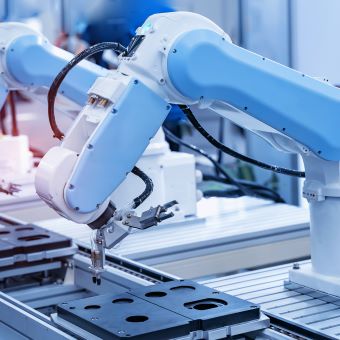
Artificial intelligence is often discussed in terms of software, algorithms, and data.
But every AI-enabled system ultimately relies on mechanical motion to execute decisions in the physical world.
From industrial robots and automated manufacturing equipment to inspection systems and intelligent infrastructure, AI determines what should happen. Bearings help determine how well it happens.
Controlled motion is fundamental to intelligent systems. Bearings enable this motion by:
As AI pushes machines toward tighter tolerances and higher duty cycles, motion quality becomes increasingly critical.
In traditional equipment, small variations in motion may be tolerable. In AI-controlled systems, those same variations can affect accuracy, repeatability, and system learning.
Simply put, AI amplifies the importance of mechanical fundamentals.
CW Bearing designs precision bearings to support consistent, controlled motion in applications where performance must be repeatable and reliable over time.
AI increases precision requirements.
Our bearings support that precision mechanically.
Why vibration control matters in intelligent systems
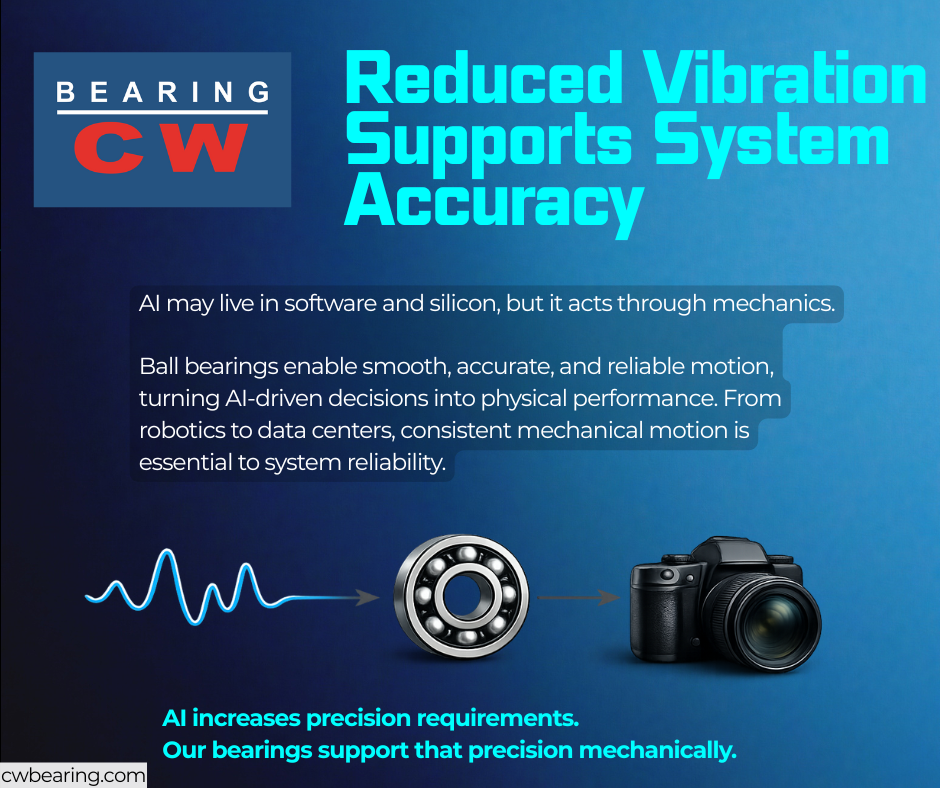
In AI-enabled systems, vibration is not just a mechanical concern; it is a data quality issue.
Sensors, vision systems, and feedback loops rely on stable mechanical platforms. Excess vibration can introduce noise, reduce measurement integrity, and degrade system performance over time.
Vibration in rotating systems can lead to:
Bearings play a central role in controlling vibration by influencing internal geometry, surface finish, lubrication behavior, and overall system stiffness.
AI systems depend on clean, consistent input data. When vibration is minimized:
In this way, mechanical stability directly supports intelligent decision-making.
CW Bearing focuses on bearing consistency and smooth operation to help manufacturers reduce vibration and support system fidelity in demanding applications.
Reduced vibration supports system accuracy — mechanically.
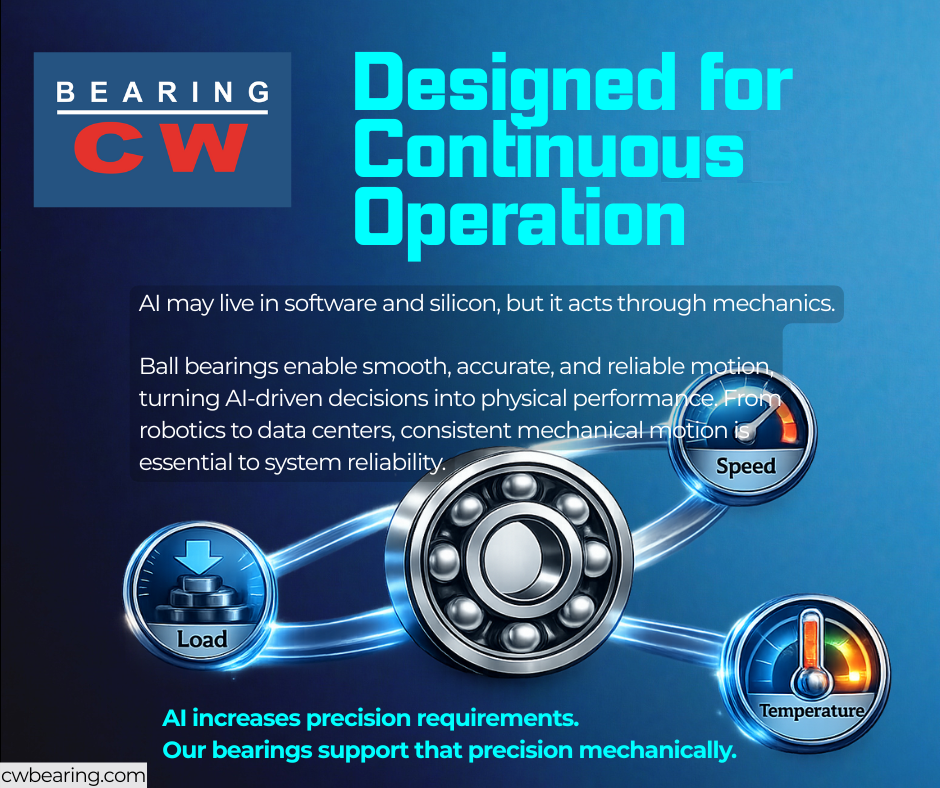
AI-driven systems are increasingly expected to operate continuously, with minimal downtime and predictable maintenance cycles.
Whether in robotics, automation, or infrastructure, reliability is no longer optional — it is a design requirement.
As duty cycles increase, bearings must perform under sustained:
Failures or inconsistencies in motion components can interrupt production, compromise data integrity, or shut down entire systems.
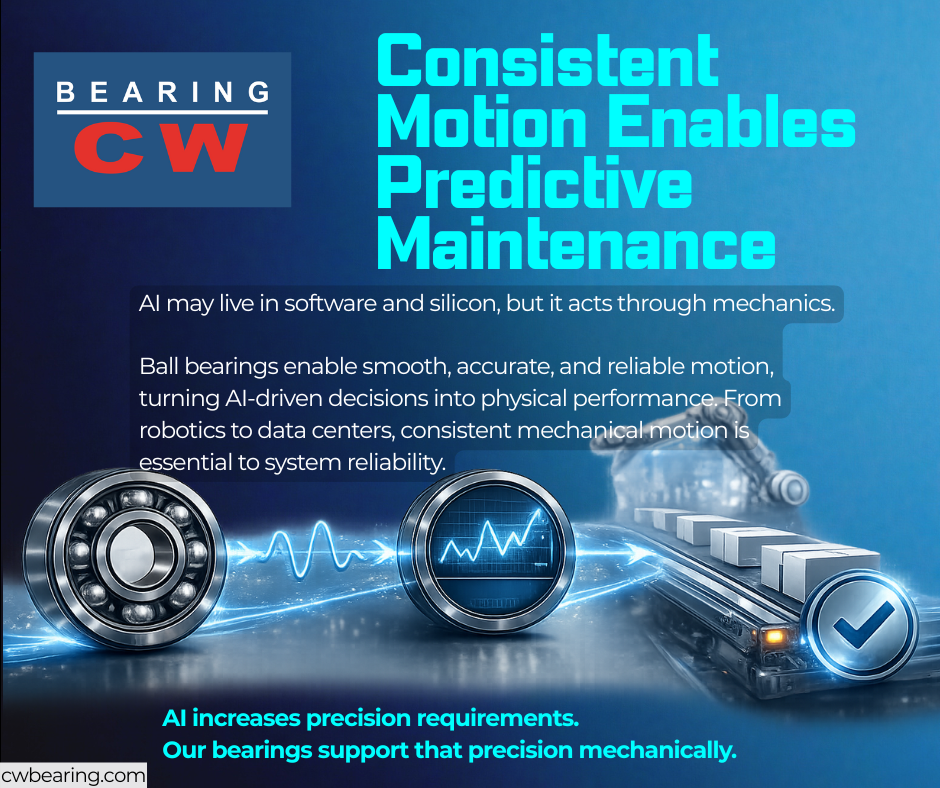
Modern AI systems are often used to monitor equipment health. Consistent bearing performance makes predictive maintenance models more effective by providing stable, repeatable operating behavior.
In other words, reliable components make intelligent maintenance possible.
CW Bearing designs bearings for durability and consistency to support long service life in continuous-duty environments, helping manufacturers maintain uptime and system confidence.
Consistent motion enables reliable operation, and smarter maintenance.